
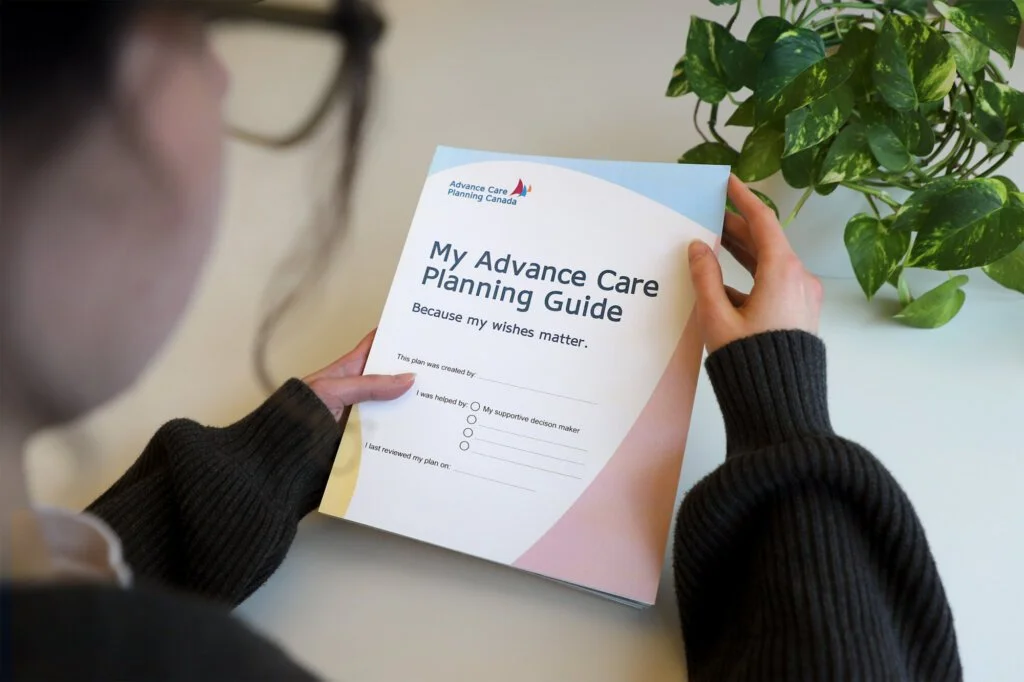
Making advance care planning more accessible for everyone
Creating a collaboration diagram with illustrations to show improvements in chronic disease management across the continuum of care, with positive impacts in patient care and provider workflows.
CLIENT
Canadian Hospice Palliative Care Association (CHPCA)
WITH
Healthcare Human Factors
Challenge
Advance care planning (ACP) is the process of thinking about and communicating your wishes and preferences for future health and personal care. As laws shift towards a more open and inclusive view of what it means to express one’s wishes and preferences, the approach to ACP has also shifted from an end-of-life process to a life planning model.
With Healthcare Human Factors, I had the opportunity to work with the Canadian Hospice Palliative Care Association to reimagine how an ACP guide might better serve the needs of all Canadians, especially people who live with physical and/or cognitive disabilities and have been historically excluded from conversations about their care.
Process
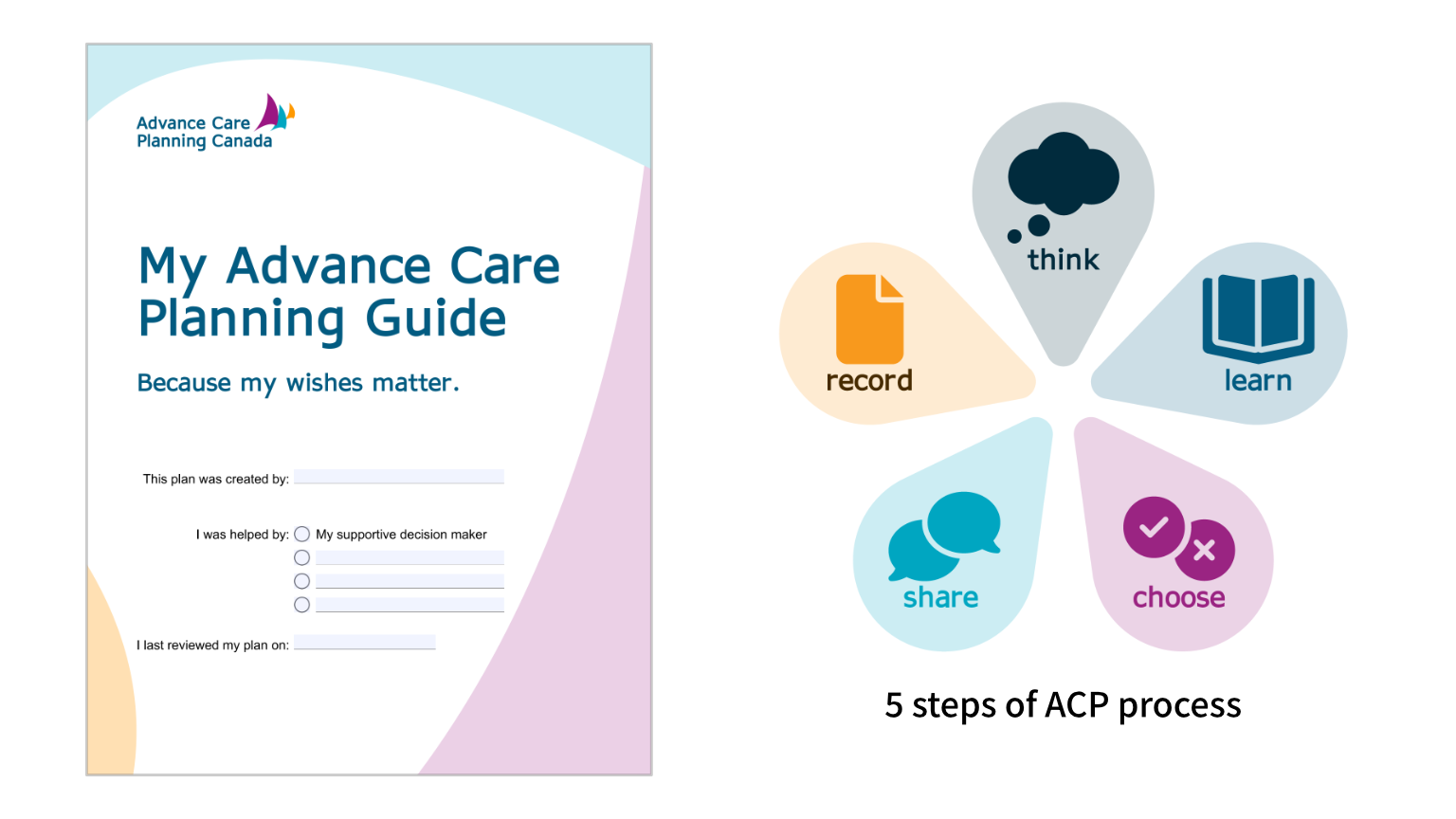
Stories, activities, and graphics supported engagement for learning and exploring aspects of ACP. The content variety and module design helped people clarify wishes, and tied everything together into actionable next steps to plan ahead in collaboration with one’s family and friends, healthcare providers, legal counsel, and government services.
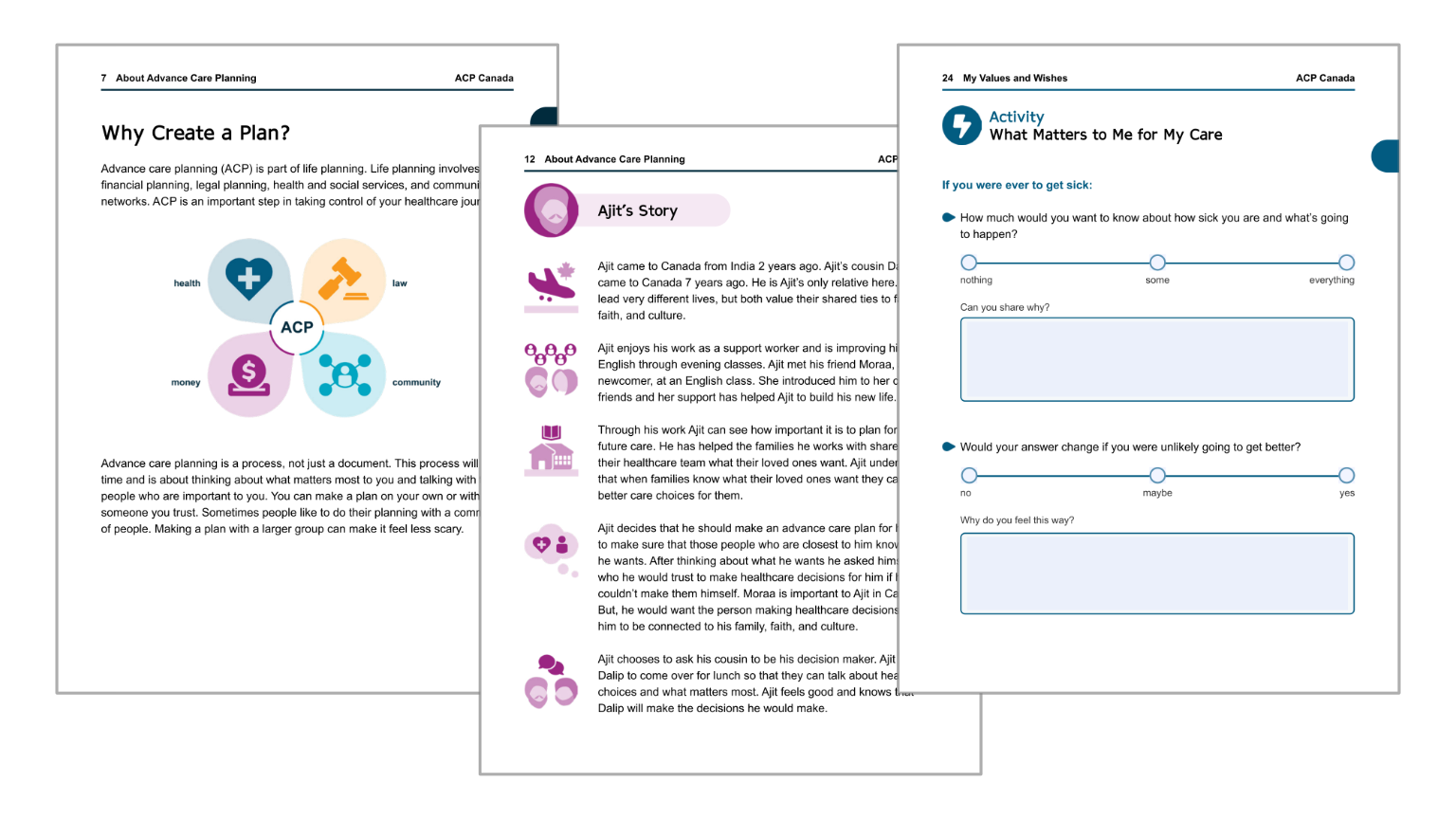
We prioritized accessibility in several ways:
Revising the guide’s language to improve readability and comprehension, in consultation with professionals in the disability and inclusion space
Designing the guide to be accessible in both digital and analog formats, including the use of screen-reader software to test for compatibility with assistive devices
Ensuring we met or exceeded WCAG and AODA standards for colours, text size, and contrast in page layouts
Using minimal colour blocks and formatting pages so the guide or its sections could be printed at home
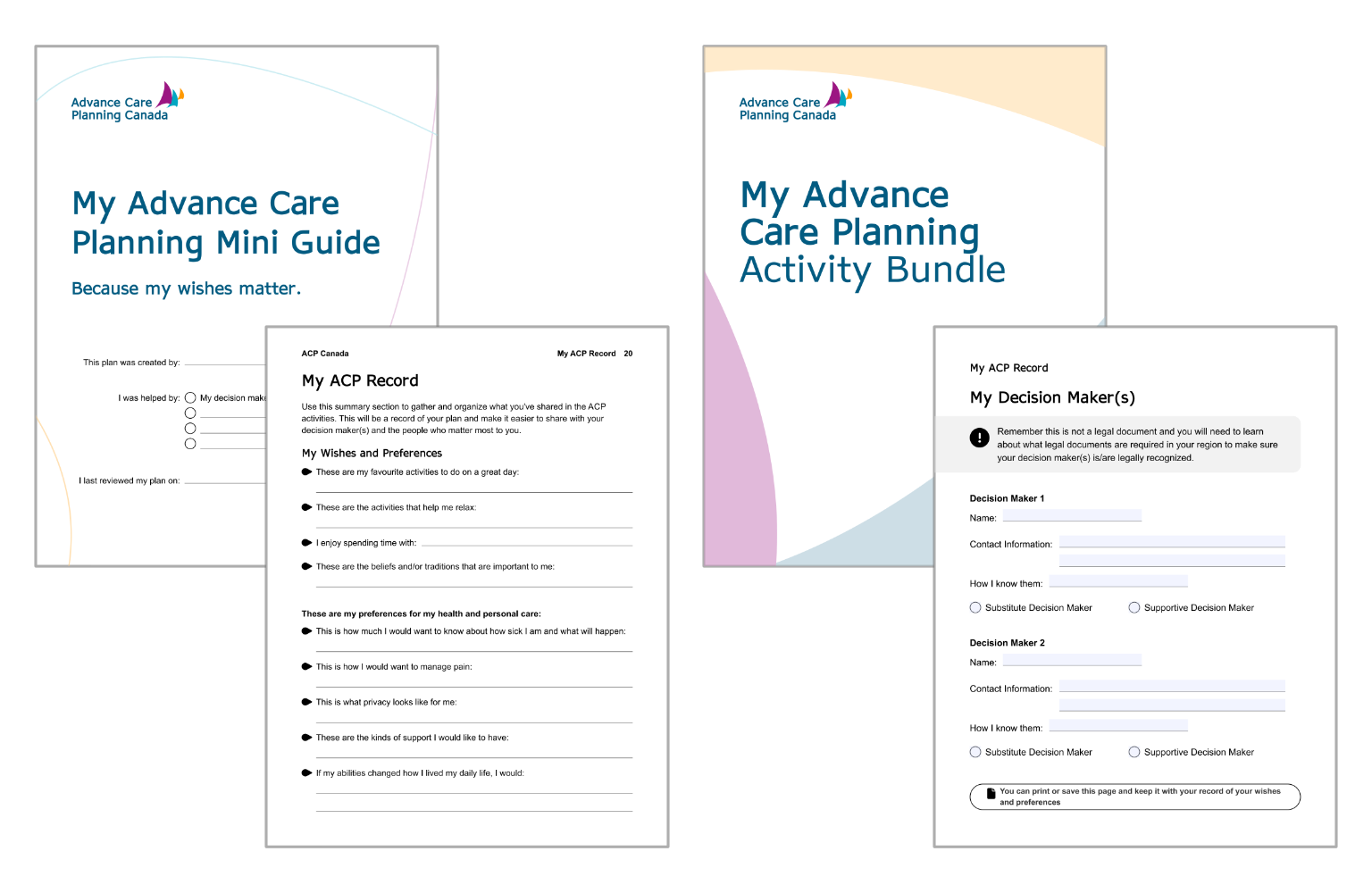
Based on initial positive reception to the new ACP guide, CHPCA expanded the project scope to include an accompanying mini ACP guide for people who require less guidance on planning, and an interactive activity kit as a resource for ACP educators and community groups who want to facilitate their own planning sessions.
Through taking a human-centred design approach, we first sought to understand the needs of a wide diversity of people in order to then design an accessible and usable ACP guide. This included having dozens of virtual interviews and facilitating co-design workshops with ACP educators, healthcare providers, and people with lived experience who have previously made their own ACP or helped another with making theirs.
We further engaged with people living with disabilities and professionals working in the disability and inclusion space, which helped us develop a comprehensive understanding and recognition of ableist and exclusionary practices. These conversations helped us recognize that all individuals have different ranges of abilities and limitations, and integrating these considerations into the guide’s design would broaden the reach and impact of our work for a wider audience.
The guide focused on creating self-affirmation around one’s own needs and wants. It used language that was supportive of individual journeys, and encouraged users to work through the guide at their own pace and comfort.
Outcome
As the project reached near completion, the CHPCA had received over 5,000 pre-orders for the English print version and over 1,000 pre-orders for French. As of 2025, over 10,000 copies have been sent across Canada in both languages.
The new ACP guide provided a foundation for the creation of several resources, including brochures, postcards and an easy-read version of the guide.
Reflection
Being given the opportunity and connections to conduct a deep exploration through numerous interviews helped us understand the perspectives of different people within the ACP space, whether they were a provider or user or advocate for ACP. Building on that, we learned to support different capabilities in the research process by sharing questions in advance so participants had time to prepare.
This preparation work extended into the collaboration process where sharing workshop agendas and presentations in advance would allow time for people to gather their thoughts and ideas to have a productive session. For the people who did not feel comfortable attending a live virtual workshop, we adapted the workshop activities into “take-home” presentations and exercises so they could be completed without live facilitation, and allowed us to gather their feedback asynchronously. In this project, doing more work upfront meant gaining more learnings and perspectives that greatly contributed to the success of the project.