
Reimagining transitional care for older people to age safely in their communities
A collaborative research initiative using evidence-based co-design to build a new integrated transitional care model to support older people as they move from hospital to home.
CLIENT
Toronto Grace Health Centre
WITH
Healthcare Human Factors
Challenge
In Ontario, the aging population is growing and placing more demands on the healthcare system. An increasing number of older people living with frailty find themselves in acute care at a hospital, but cannot be discharged home without safe supports in place. This can result in a higher risk of physical and cognitive decline while waiting for proper support, and discharging without proper planning may lead to re-admission. Meanwhile, this creates stress on hospital capacity as bed availability is decreased for people who require acute care, leading to lower quality care for all.
At Toronto Grace Health Centre, a rehabilitation hospital in downtown Toronto, they wanted to develop a new care model that would take advantage of their existing remote monitoring program, and incorporate additional support from the hospital and community health partners, in order to transition older people out of the hospital and back into their communities.
Process
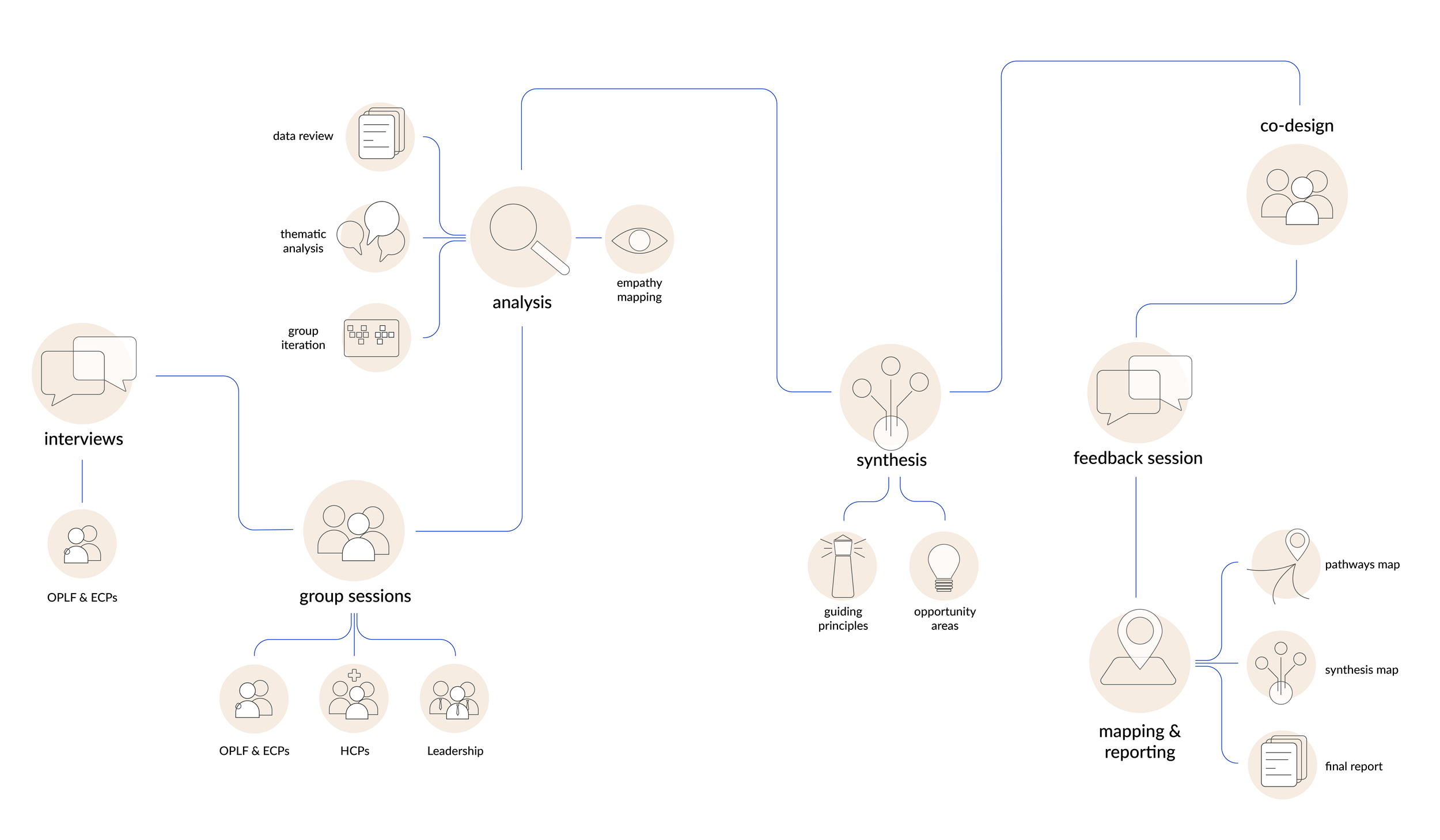
Through our research, we identified existing gaps and challenges, along with opportunities for innovations in care and support. Some important insights were: healthcare is more than just physical care, the disconnect between hospital and community is challenging to navigate for everyone (not just patients), and informal caregivers need greater support to continue in their role. We also noted how language and income impact care equity and experiences, which was important to highlight with Toronto having a vast multicultural and diverse population.
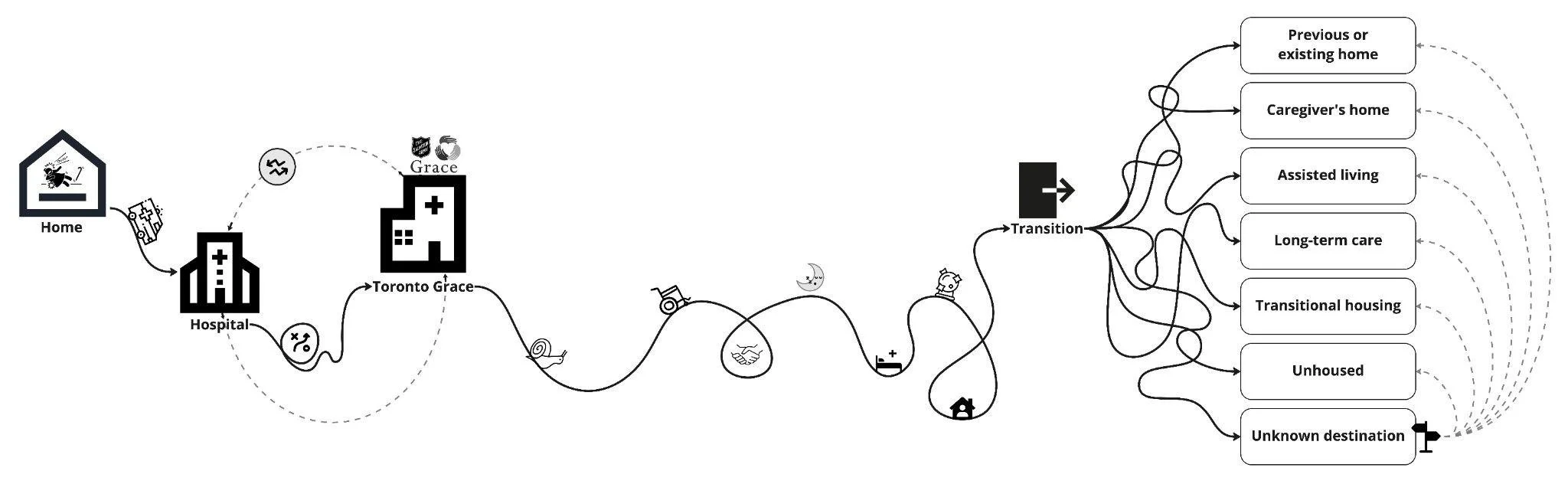
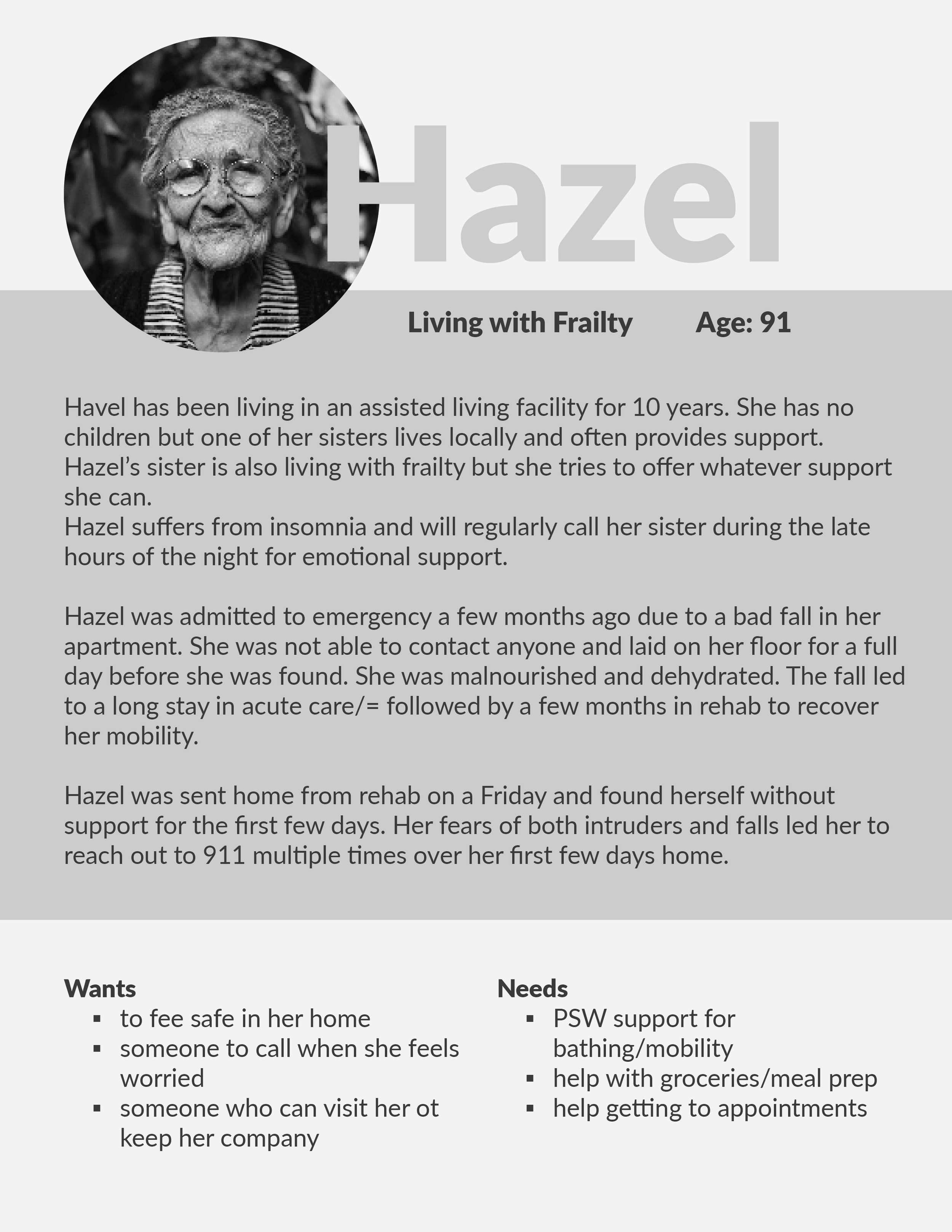
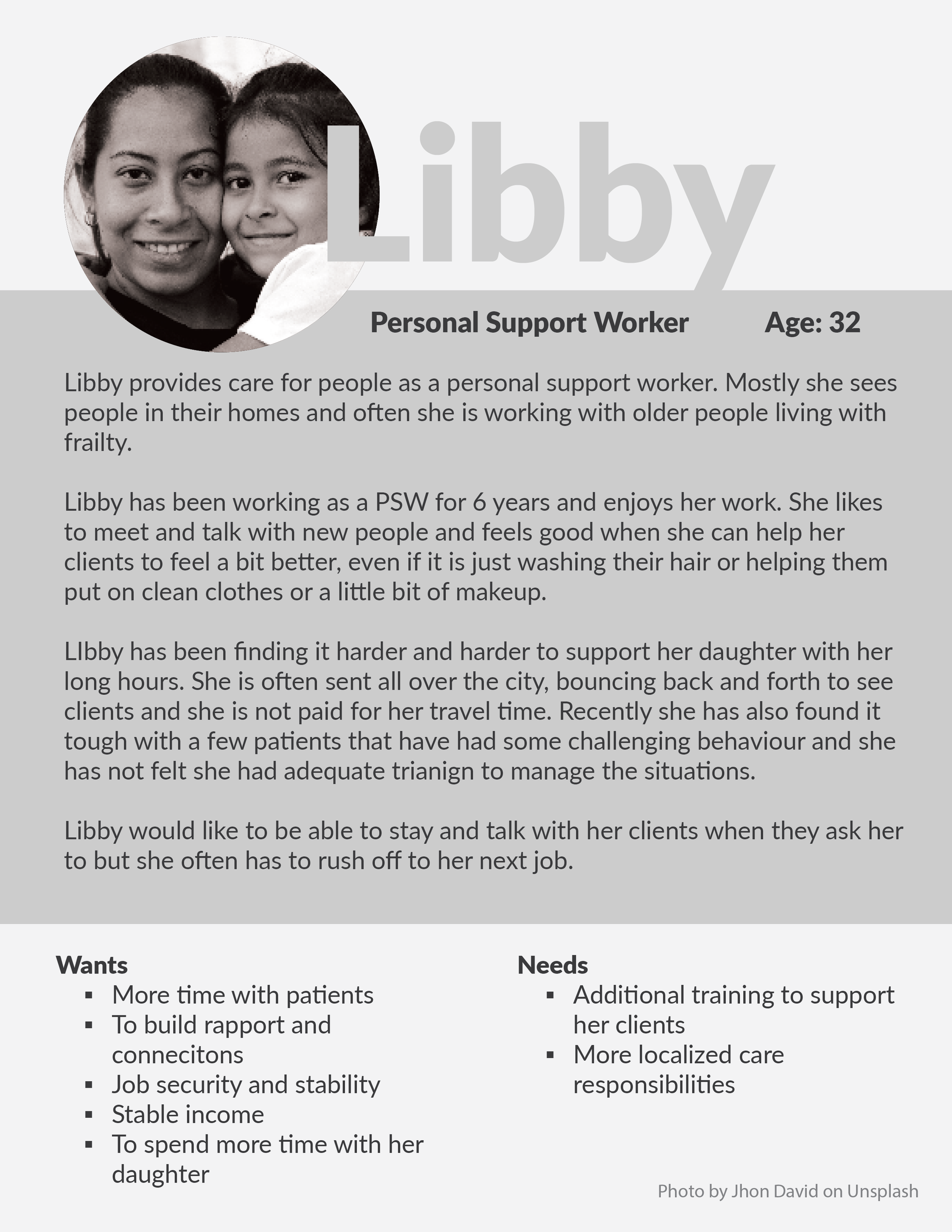
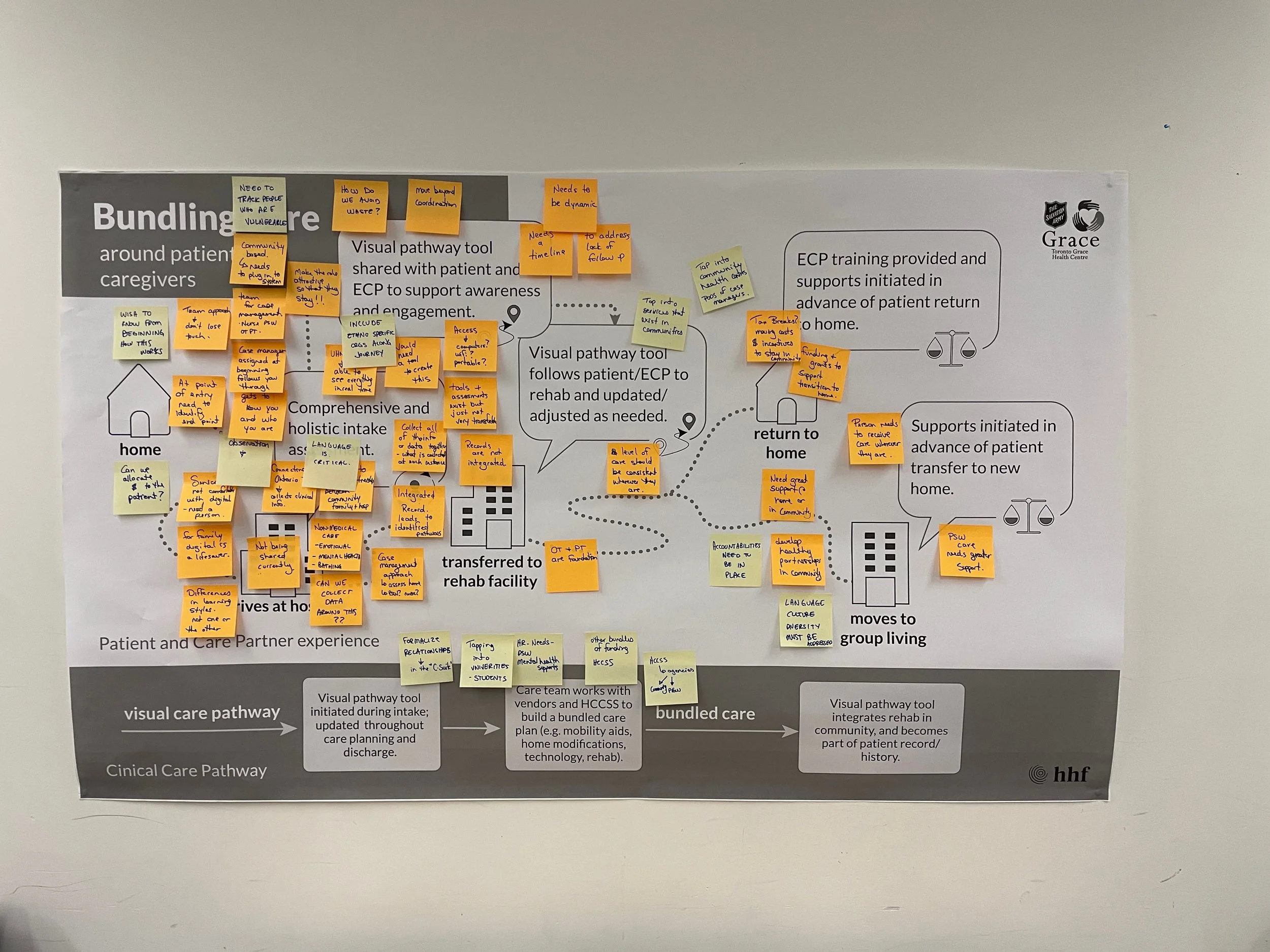
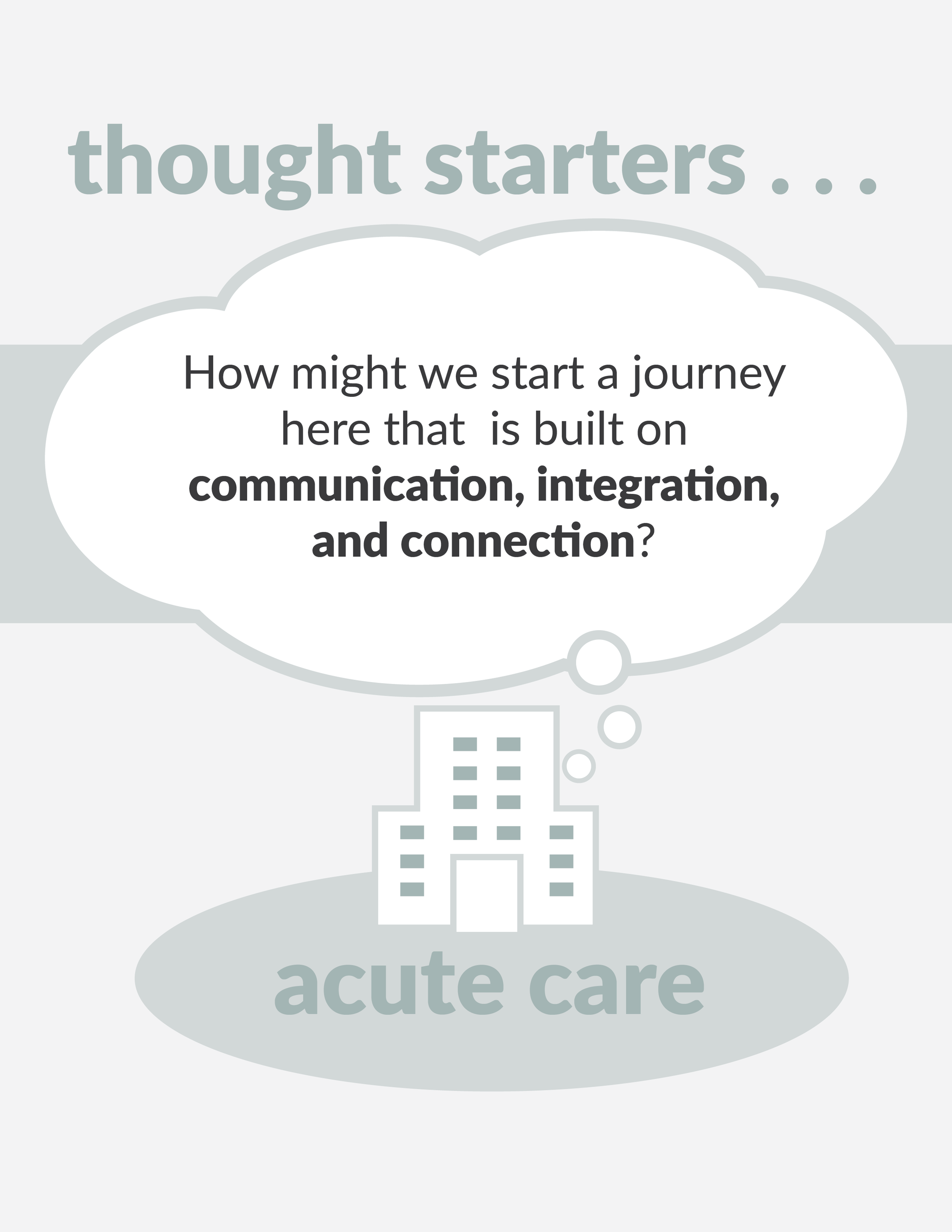
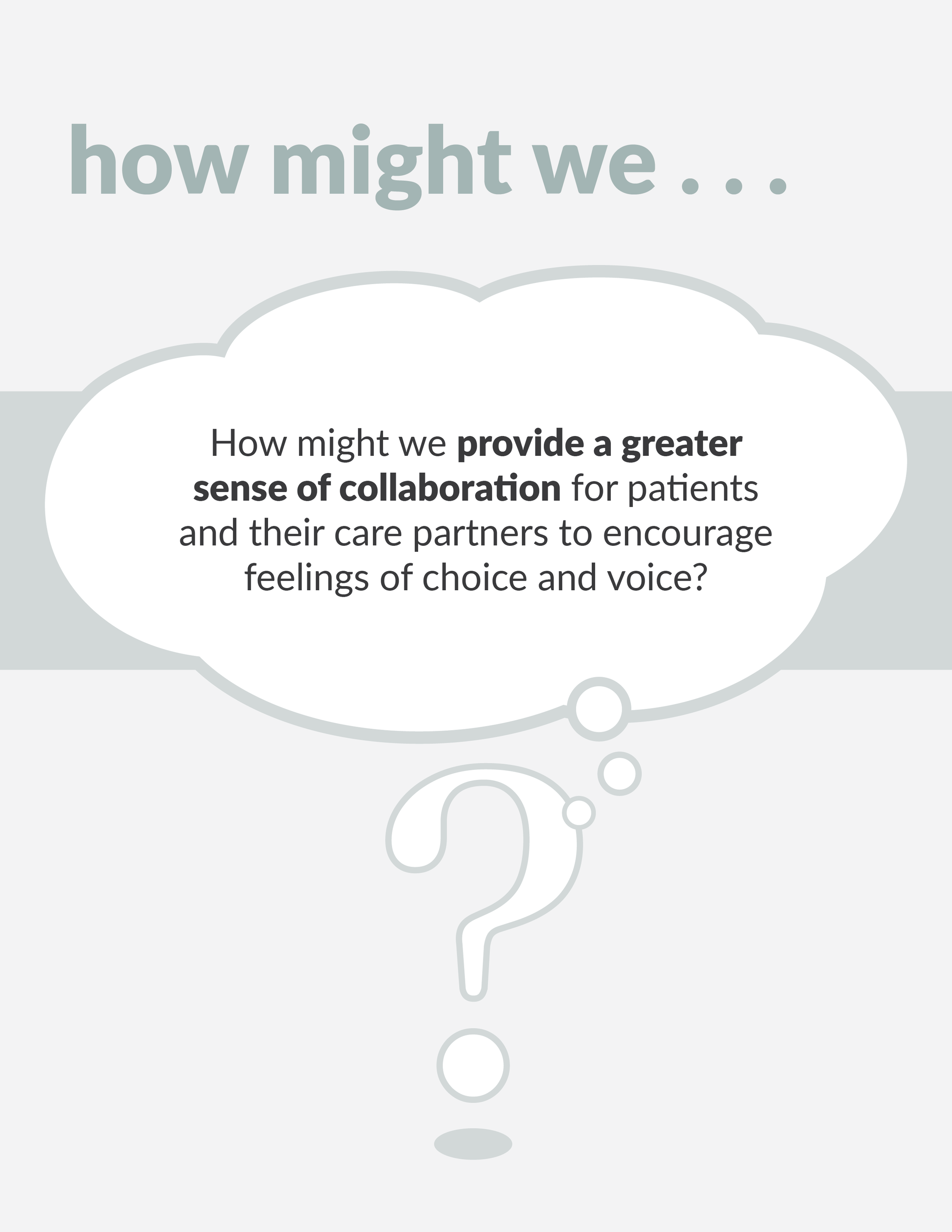
The research process culminated in a large World Cafe style co-design session where everyone came together to reimagine transitions in care, create integrated pathways to home, and uncover ways to support holistic care. We used personas, journey maps, and proposed care pathways to gather feedback and spark meaningful conversations between attendees. A set of guiding principles helped to connect research insights to creative solutions that came up during the co-design session. These included taking a whole person approach to care, including the full circle of caregivers (formal and informal, paid and unpaid), and providing open communication between people, hospital, and the community.
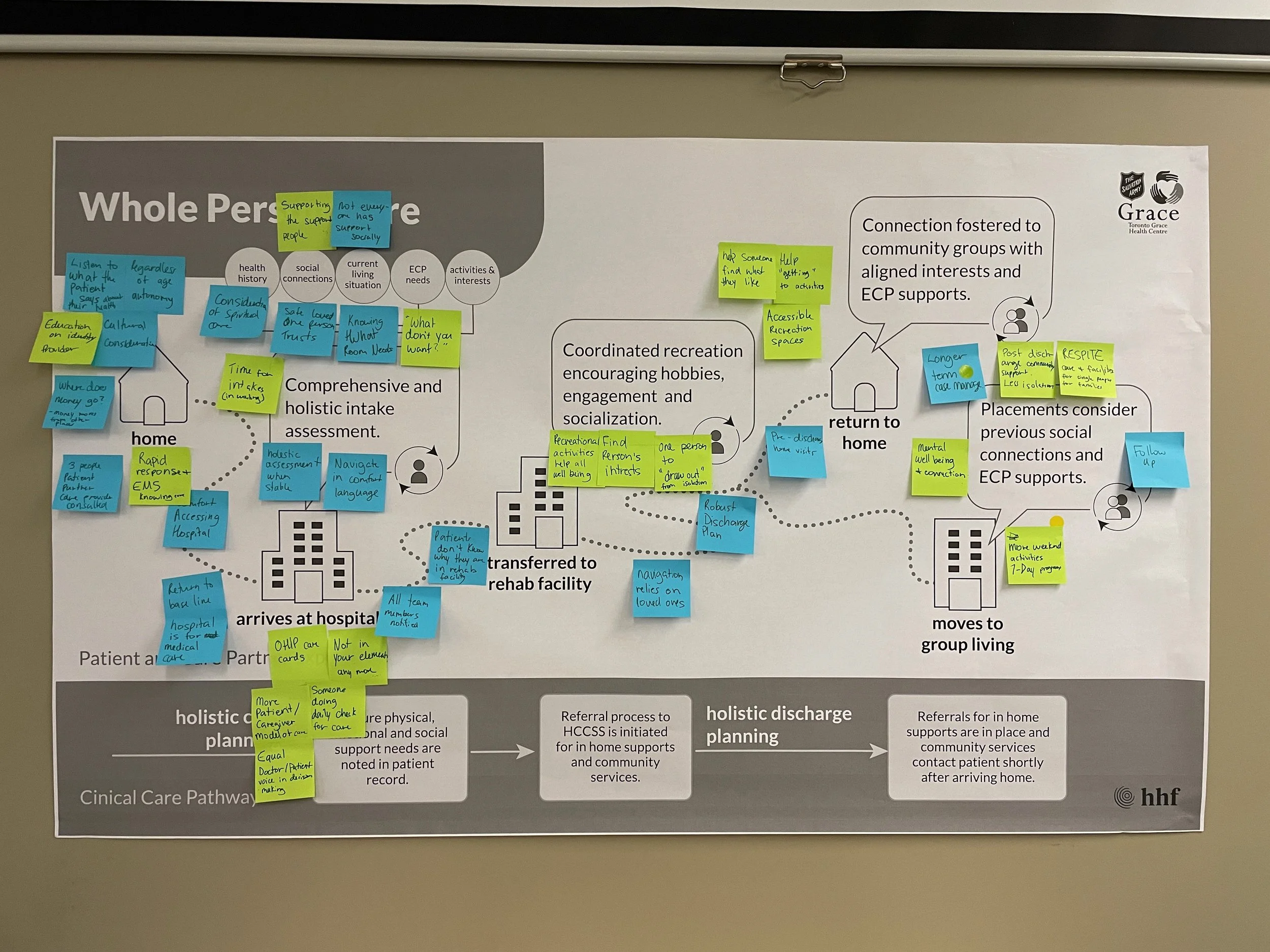
We conducted extensive ethnographic research through semi-structured interviews and group workshops to learn about each person’s lived experiences with the care they received (or lacked) in both hospital and home environments. We engaged with older people who were current or former patients of Toronto Grace and their informal caregivers, healthcare providers who worked in the hospital and/or community home support, and leadership from both hospital and community organizations.
Outcome
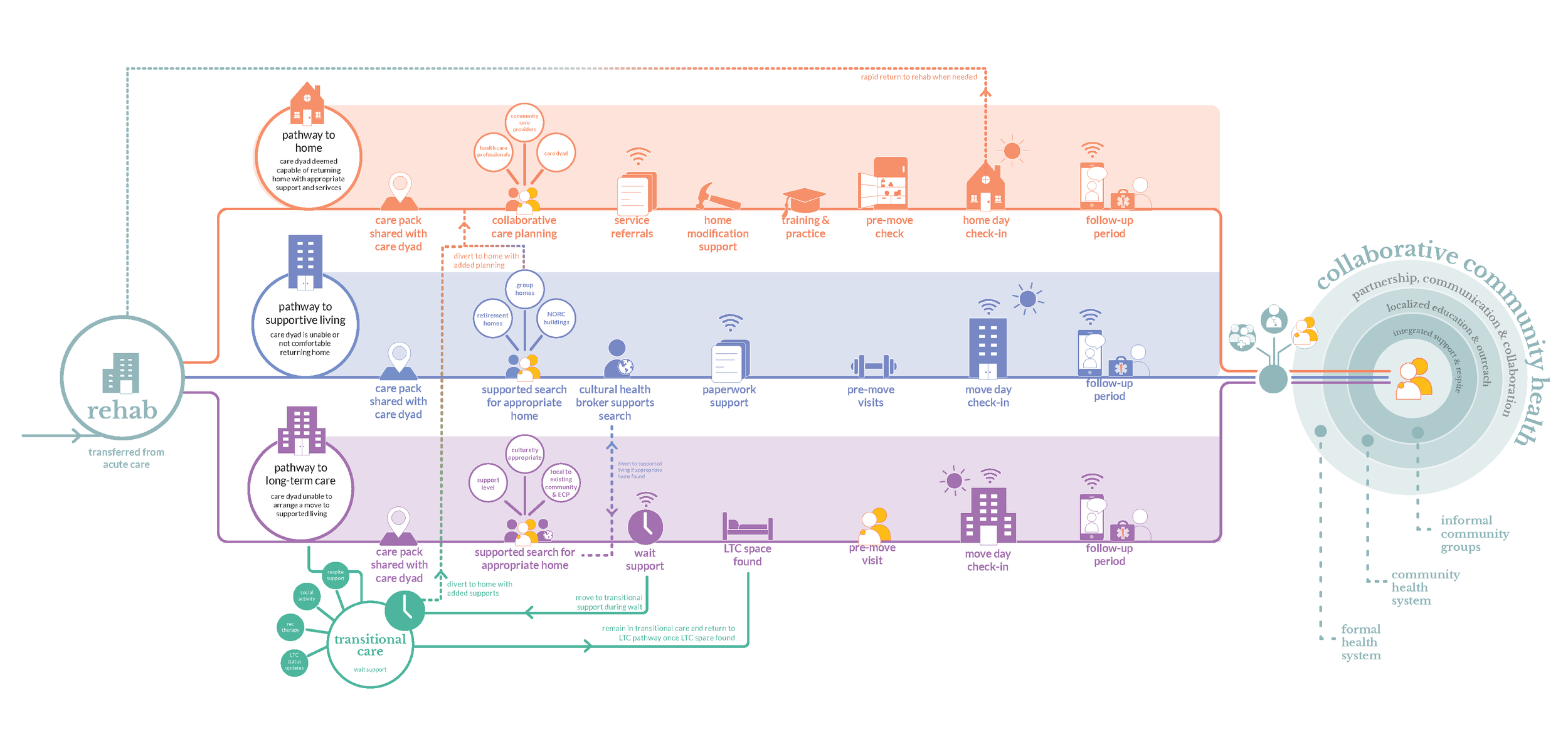
Following the co-design workshop, we gathered all the findings and ideas together to develop the Integrated Transitional Care Model (ITCM), which provides a framework of pathways to support aging in the right place, with the right level of care and support, and at the right time.
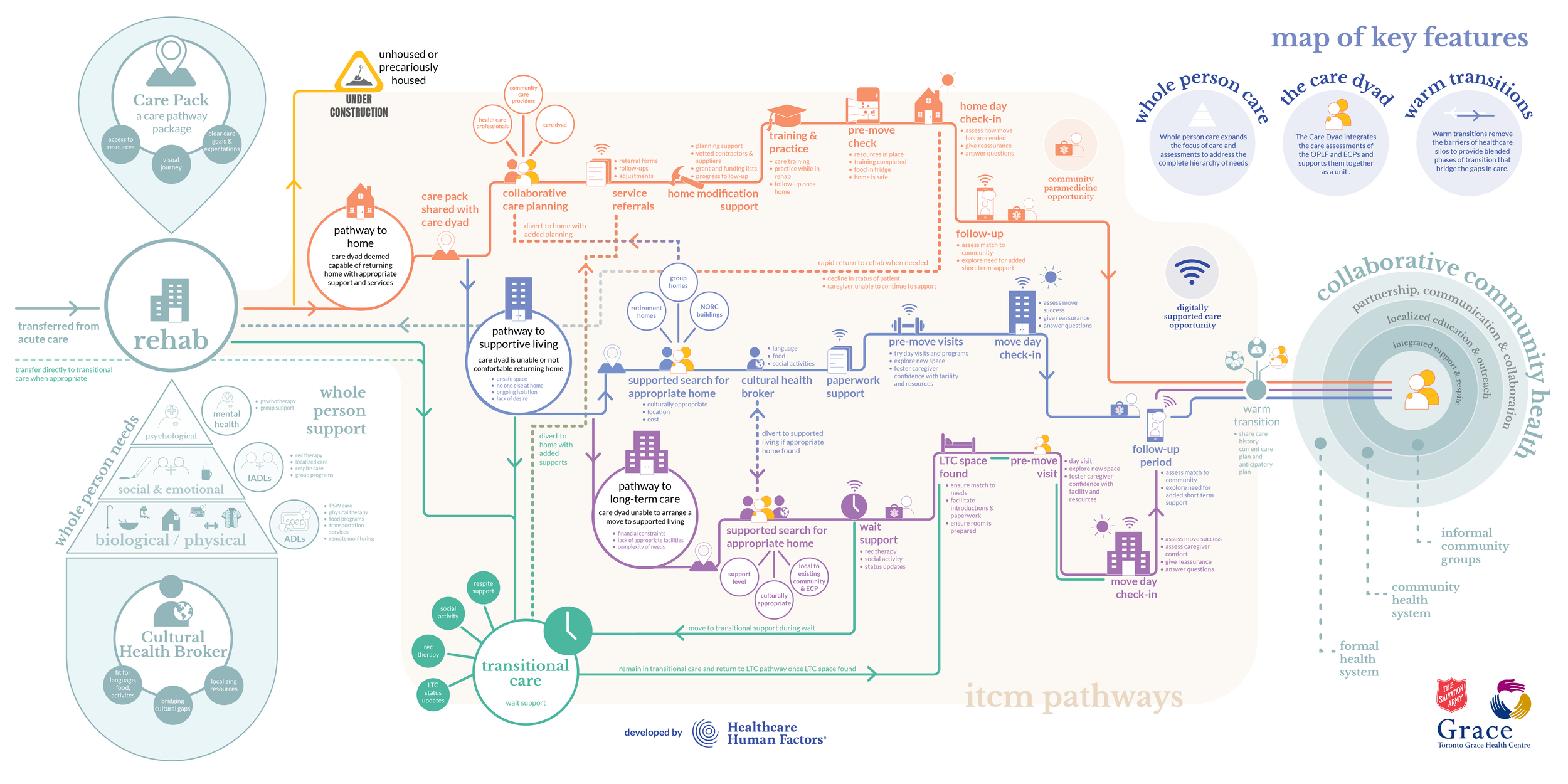
The three different pathways lead to home, supportive living, and long-term care. It also shows how the hospital can extend connections into the community, and ways to bring community supports into the hospital early on before discharge. It also advocates for expanding transitional care and home monitoring to fill in gaps of care, and helps to visualize planning for anticipated or future care. Finally, the model highlights how collaborative community health is composed of the formal health care system, community health providers, and informal and social connections. Altogether, the framework shows clear objectives where every person and provider can contribute to the improved health, care and support of older adults along their aging journey.
Reflection
The best way to learn about different experiences is by listening to people with empathy, and giving them the safe space to share their stories with us. In return, the best way to honour their experiences is by including them throughout the design process, where they have the opportunity to connect with others and to have their voices shape the outcomes.
I was reminded that health care is an ongoing continuum of formal and informal interactions, where clarity in communication and expectations can go a long way in making transitions easier to manage. With the development of the new care model, I hoped we gave older people and the people who love and care for them a sense of momentum and purpose, to age in the right place with safety and community every step of the way.