
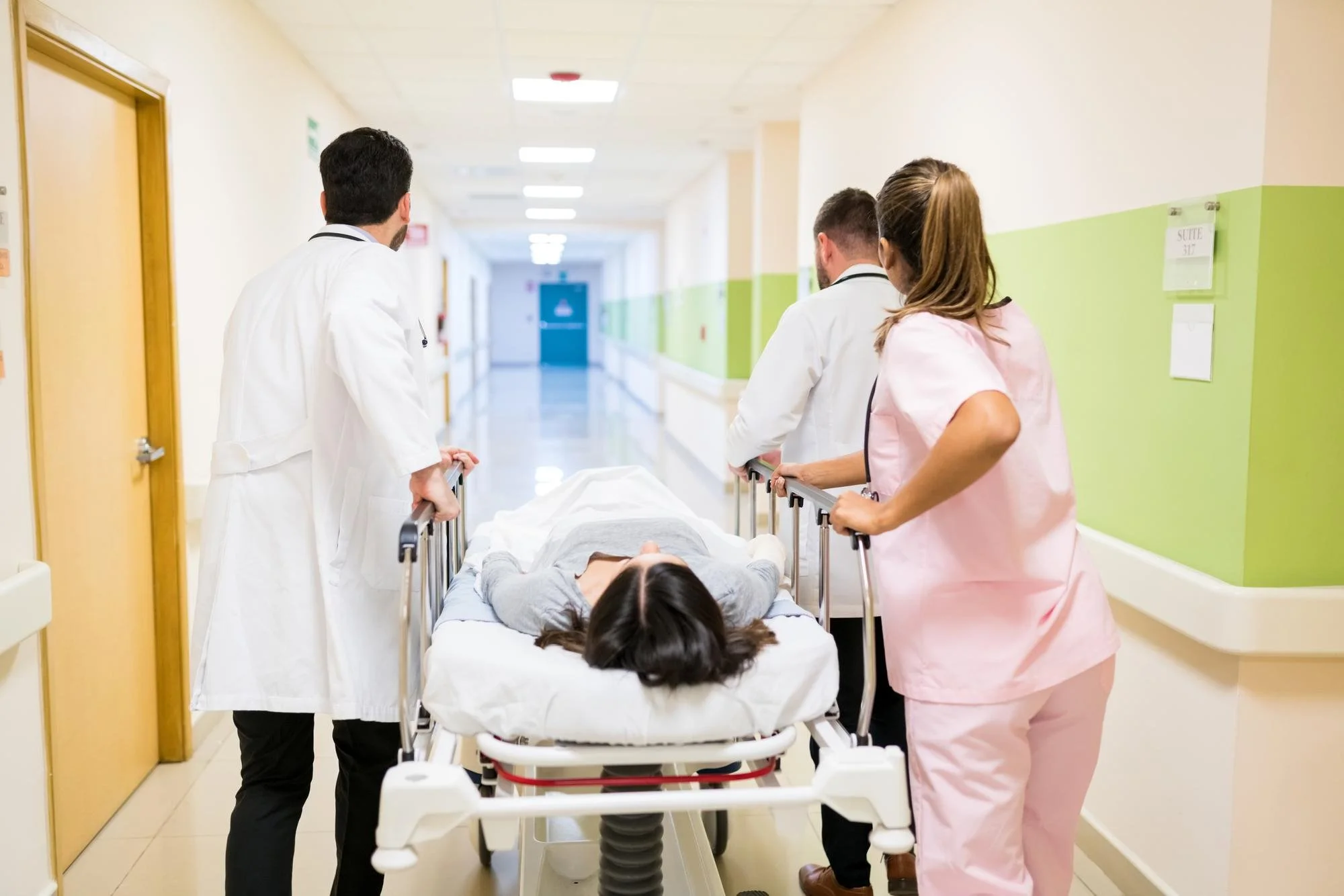
Improving safety during patient transfers through process mapping workflows
Mapping the multi-team process of patient transfers from the emergency department to inpatient units clarified key success measures and identified opportunities to strengthen communication and workflows, improving patient care and safety outcomes.
CLIENT
UHN Transfer of Accountability and Information Steering Committee
WITH
Healthcare Human Factors
Challenge
Within hospitals, transitions in care are a top contributor to serious safety events. This happens when the accountability and information of a patient is transferred from one care provider to another to ensure the patient continues to receive the right kind of care. However, the variability in the transfer process can increase risks of errors, which can negatively impact patient safety in a high-volume, high-pressure environment of the emergency department (ED).
As a service designer, I worked alongside my human factors analyst colleagues to support the UHN Transfer of Accountability and Information (TOA/I) Steering Committee in standardizing communication and workflows through two ways: 1) clarifying the current state of patient transfers through process mapping; and 2) identifying system-level factors that influence safety and impact staff and patient experiences.
Process
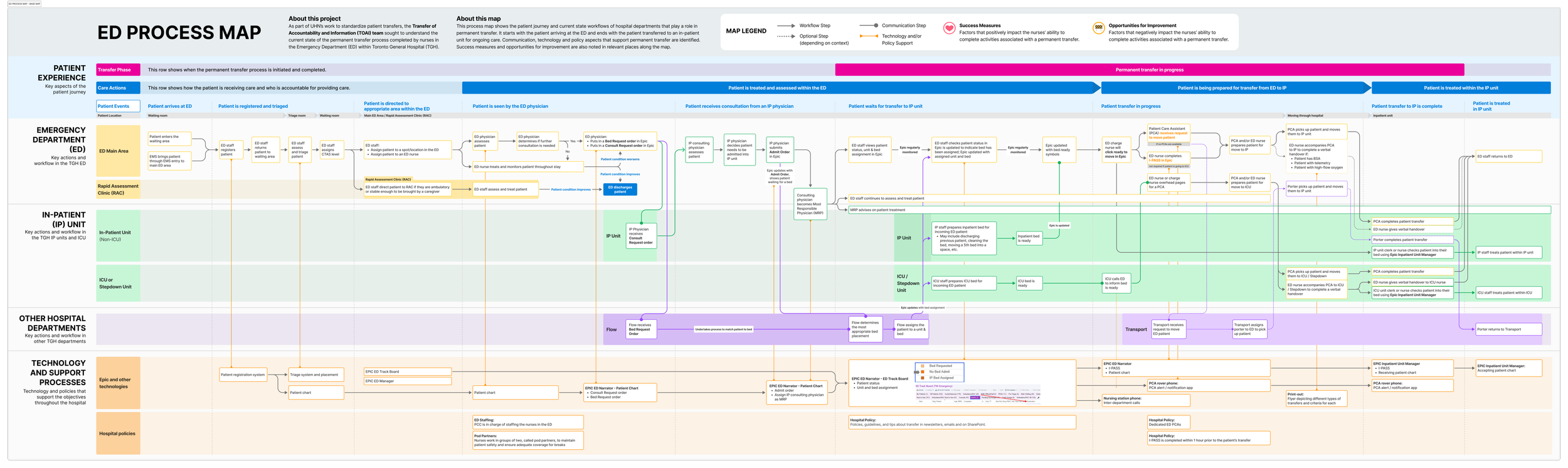
At the top, we tracked the timeline of the patient’s ED experience. This consists of the overall transfer phase, care actions undertaken by ED staff and other hospital teams, and patient events along the acute care journey (e.g. assessment, waiting, additional testing, etc.). Beneath that, parallel workflow lanes revealed interdependencies that are not transparent to individual teams alone. Care providers can view the map and identify where they belong in the overall process, and how their work and patient situation can impact or be affected another team’s workflow. This formed the base layer map.
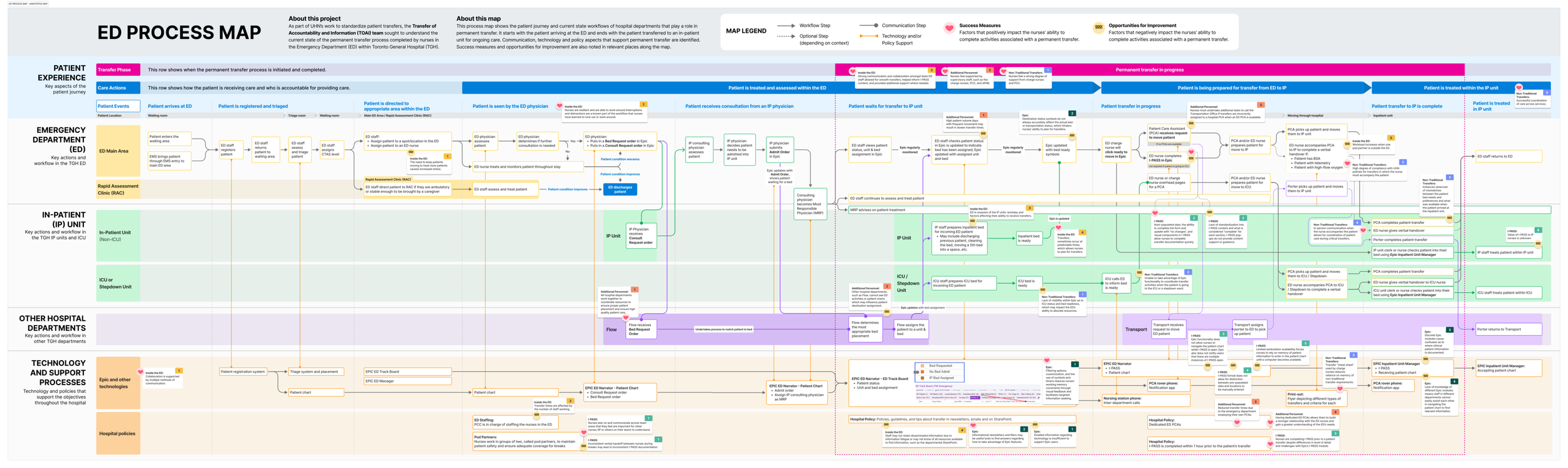
Using the base layer map, we overlaid safety risks, critical points of care, and opportunities for interventions to support decision-making that were identified in our research. These additional pieces of content and context, along with contrasting line types and visual icons, helped to embed insights directly into the transfer process. Altogether, this formed the annotated map.
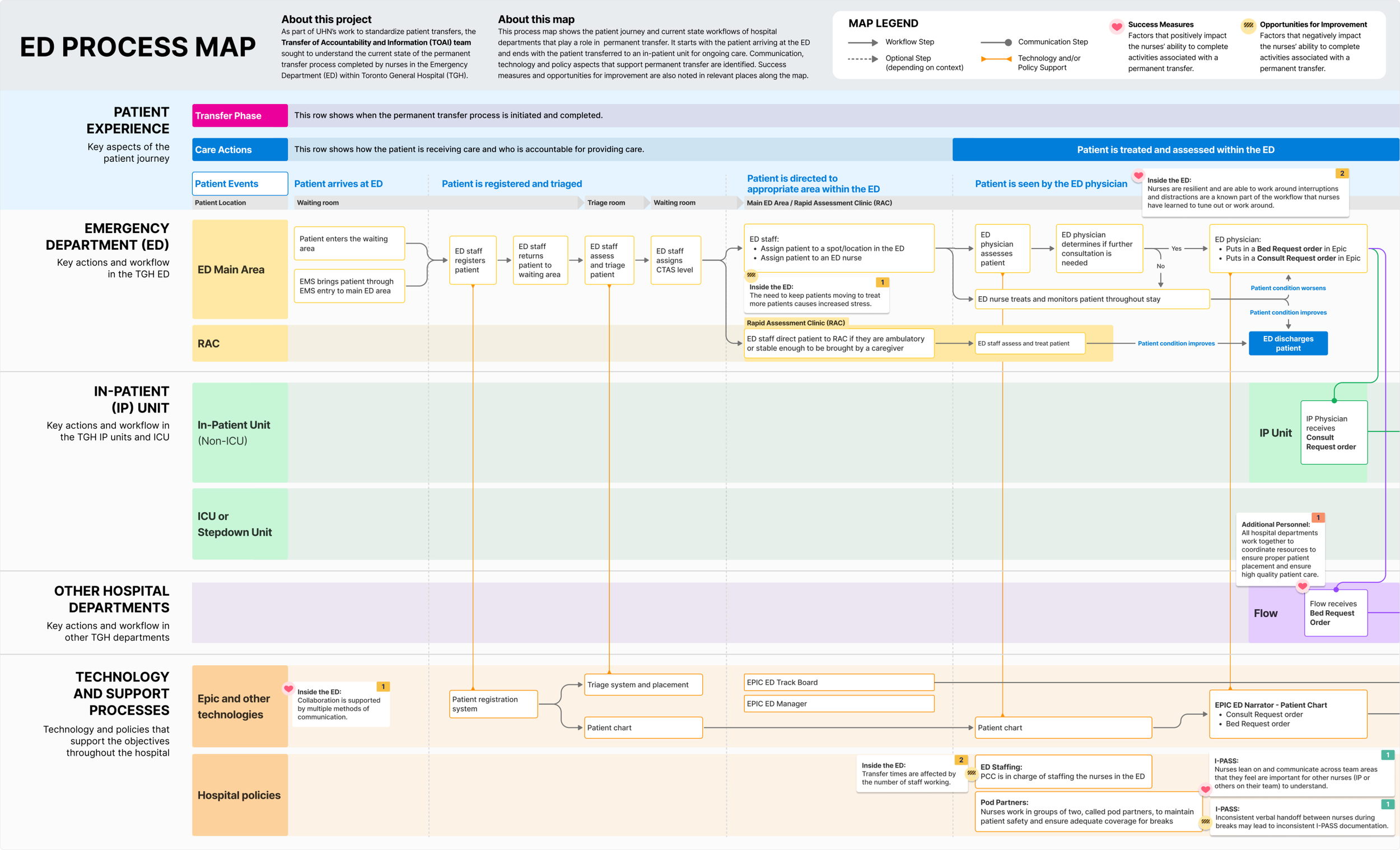
Both maps could be viewed fully at once or in shorter “print-friendly” versions, which were developed to support dissemination and improve ease-of-use with other hospital teams who were not directly involved in the patient transfer process.
We started with a preliminary review of existing documents and policies about patient transfers, and met with the patient safety team to narrow our scope on three key areas: technology, teamwork, and clinical environments.
Over the course of one week, we conducted ethnographic research in the ED. This consisted of observing multiple patient transfer workflows and interviewing ED staff, including physicians, nurses, flow management and transport team members.
We collected the data and findings from our observations and developed process maps that visualized the full ED-to-inpatient transfer journey. We also synthesized findings into major themes that influence the ED context: technologies used to chart and manage patients, hospital policies, staff collaboration within the ED and with other departments, and workflow variability in response to the current ED situation. In all, we identified 15 success measures that support transfers, and 22 opportunities for improvement.
Finally, we translated all of our findings visually through highly-detailed process maps for care providers and hospital management audiences. The maps are a blend of user journey maps and service blueprints, showing the patient experience, ED workflows, inpatient unit workflows, other hospital departments involved in the transfer process, and technologies and policies that shaped workflow decisions.
Outcome
We delivered our findings, process maps and recommendations to the UHN TOA/I Steering Committee, which were further shared with stakeholders across the hospital network as tools to inform future decisions about strengthening the transfer process and reducing patient risks.
This work can improve care outcomes by:
Standardizing required transfer information to make transfers more safe and effective
Aligning sender and receiver workflows to improve patient flow efficiency
Defining clear ownership of transfer activities to reduce confusion and redundancy
Reducing reliance on informal workarounds that may introduce unnecessary risks to care
Strengthening communication to patients during transfers so patients remain informed about expectations
Through our efforts, we helped the committee gain visibility into how transfers unfold in practice, and guided their decisions on how to make communications more timely, accurate and relevant to patient care. Moving forward, this would lead to more reliable transfer processes at UHN acute care sites.

Reflection
Using Miro as a quick prototyping tool let our team sketch out the current state process and validate it with immediate feedback, which kept us grounded in how things actually worked in the ED and not just how they were supposed to work on paper. As gaps began to surface, we were careful to frame them around system-level factors and workflows rather than assigning individual blame. At the same time, we wanted to highlight successes and things that were already working well, rather than only hunting for flaws.
Some of the most meaningful moments came from building rapport with providers in a high-pressure environment, where we found windows of opportunity to interview or shadow them between patient care. Getting to be in the ED is a privilege we did not take for granted, so we were conscious about being there to learn and ask questions, and stepping aside without hesitation when priorities shifted - which happened often in the ED environment.
We also appreciated how ED management handled our presence by introducing us in morning rounds and making our purpose clear to the team. That way, our presence did not add stress or caused concern or confusion during actual patient care.